

 Polski
 English







Unmowed strips, patches of torn-up turf, and the need for repeat passes can significantly extend mowing time. Before blaming the tractor’s power, check the mower’s settings. Cutting height, machine leveling, PTO speed, and travel speed should all be tailored to the specific operating conditions.
Efficient mowing begins with achieving an even cut on the very first pass. How should you prepare a flail mower, and what adjustments can be made if it leaves an uneven surface?
Check the mower’s condition before making adjustments
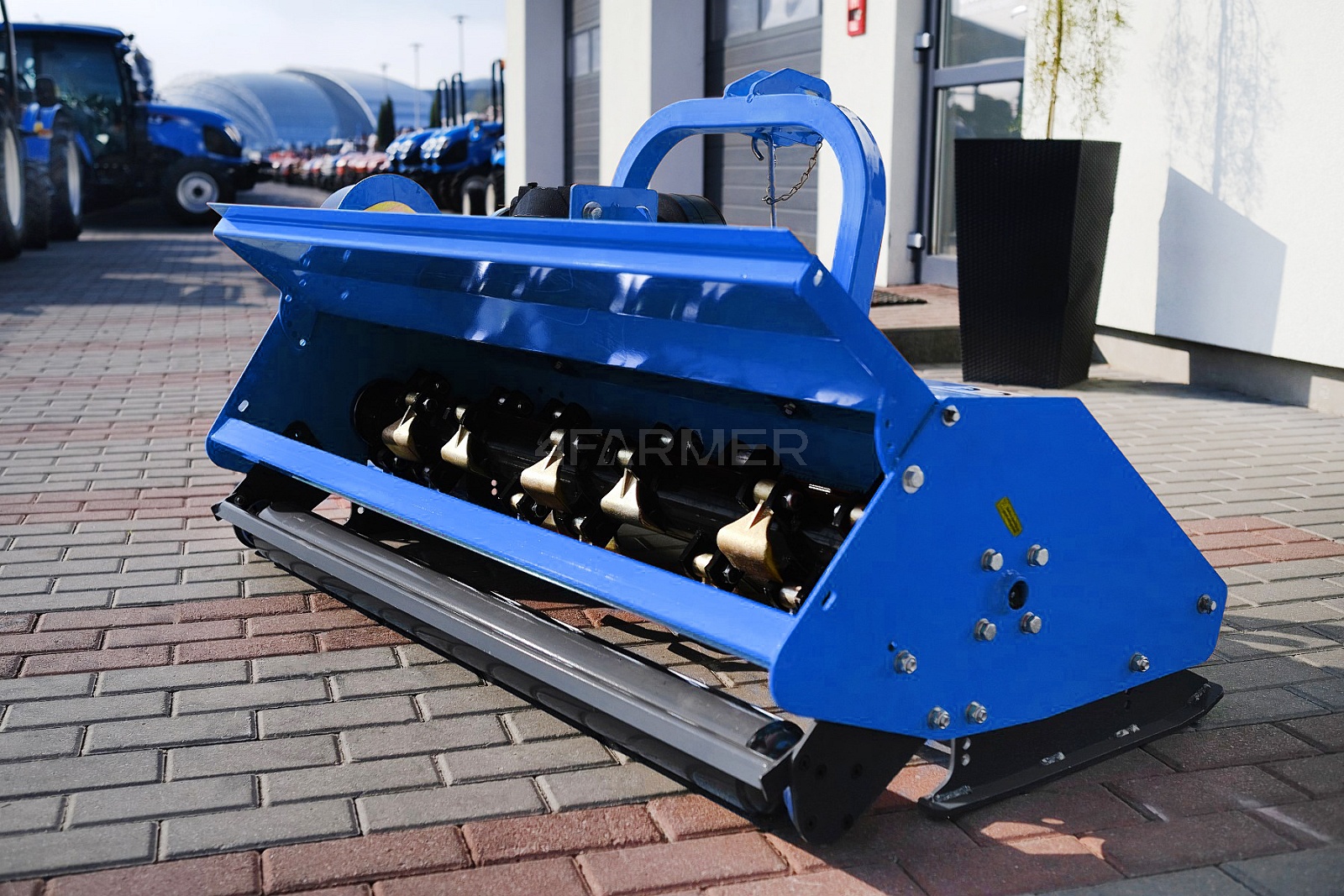
Even a correctly configured machine may produce an uneven cut if its working components are damaged or excessively worn. Before starting work, inspect the condition of the flails or knives, their mountings, and ensure they can move freely. Remove any tangled twine or accumulated plant debris.
Also, check the drive belts and their tension according to the manufacturer’s manual. Belt slippage can impair the rotor’s performance under load. Additionally, clean the rear roller—soil and vegetation buildup on it can make it difficult to maintain a consistent cutting height.
Always perform inspections and adjustments only after disengaging the PTO, stopping the engine, removing the ignition key, and ensuring that all moving parts have come to a complete standstill. If a task requires lifting the mower, secure it firmly using appropriate supports.
Level the mower on a flat surface
If one side of the mower cuts lower than the other, first check the suspension settings. Position the tractor and mower on a level, hard surface and check the machine's orientation in its working position.
Lateral leveling is adjusted using the adjustable lift rod of the three-point hitch. Both sides of the mower should be at the same height. Next, check the front-to-rear alignment and, if necessary, adjust the length of the top link.
The precise working position depends on the machine's design, so always refer to the manual for your specific model. Do not tilt the mower too far forward in an attempt to achieve a lower cut.
Adjust the cutting height using the rear roller
On many flail mowers, the cutting height is adjusted by changing the position of the rear roller. The roller mounts must be set to the same position on both sides of the machine.
After adjustment, verify the actual clearance between the working components and the ground. Simply selecting a specific mounting hole does not guarantee a universal cutting height—the adjustment range varies by model.
The more uneven the terrain, the higher you should set the cutting height. A setting that is too low may cause the flails to strike the ground, accelerating wear and increasing the risk of picking up stones. When working on unfamiliar terrain, start with a higher cutting setting, after first inspecting the area and removing any visible obstacles.
Maintain the PTO speed required by the mower
Tractor travel speed and PTO (power take-off) rotational speed are two distinct parameters. Even when reducing your travel speed, you must ensure that the PTO speed required by the implement is maintained.
For example, the EFGC-K 145 4FARMER flail mower is designed to operate at a PTO speed of 540 rpm. This figure refers to the power take-off shaft, not the tractor engine's RPM. Always consult the manual for your specific model to determine the correct settings.
Operating at too low a speed can compromise the quality of the cut and the shredding process. Conversely, never exceed the speed limit specified by the manufacturer, as doing so risks damaging the machine.
Adjust travel speed according to the amount of vegetation
A single travel speed will not be equally effective for both regularly mowed grass and densely overgrown, uncultivated land. Start by driving at a moderate pace and observe the results.
Increase your speed gradually, ensuring that the mower leaves an even surface and the tractor maintains the required engine RPM.
If you notice patches of uncut vegetation or if the engine RPM drops significantly under load, reduce your driving speed. Dense vegetation requires a slower pace and sufficient power reserves.
Whenever possible, choose a time when the vegetation is dry and the ground is firm enough to support the equipment. Wet material can cause the mower to clog and result in an uneven cut.
Perform a test run and adjust one parameter at a time
Treat the first pass as a test of your settings. Once the equipment has come to a complete and safe stop, check whether the cutting height is uniform across the entire working width, look for any uncut vegetation, and ensure that the flails are not making contact with the ground.
If the results are unsatisfactory, adjust only one parameter and repeat the test. This makes it easier to determine whether an improvement was due to slowing down, increasing the cutting height, or correcting the leveling.
If patches of uncut vegetation remain, start by checking the PTO speed and reducing your driving speed.
...pass. If one side is clearly cutting lower, check the suspension and the setting of the rear roller (or ground-following roller). Persistent uneven cutting may also require an inspection of the working components and the drive system.
Check the intended purpose of any opening flap
If the mower is equipped with an opening flap, consult the manual to determine its purpose and the permitted positions during operation. The fact that it can be opened does not automatically mean it is intended for regulating material flow while the machine is running.
Do not remove guards or other safety features in an attempt to increase efficiency. The machine must always be operated with all safety guards in place, in the configuration specified by the manufacturer.
Ensure the mower is properly matched to the tractor
While adjustments can help optimize performance, they cannot compensate for an incorrect machine selection. A mower that is too wide or has power requirements exceeding the tractor's capacity can overload the unit, especially when working in tall, dense vegetation.
If, despite correct settings, you find yourself having to work at a very slow pace and the engine RPM drops under load, check the mower’s power requirements against your tractor’s capabilities and the specific mowing conditions. You can find further tips in our guide: How to match the working width of a flail mower to tractor power?.