

 Polski
 English




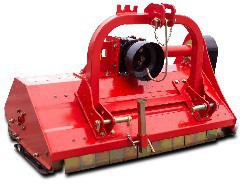




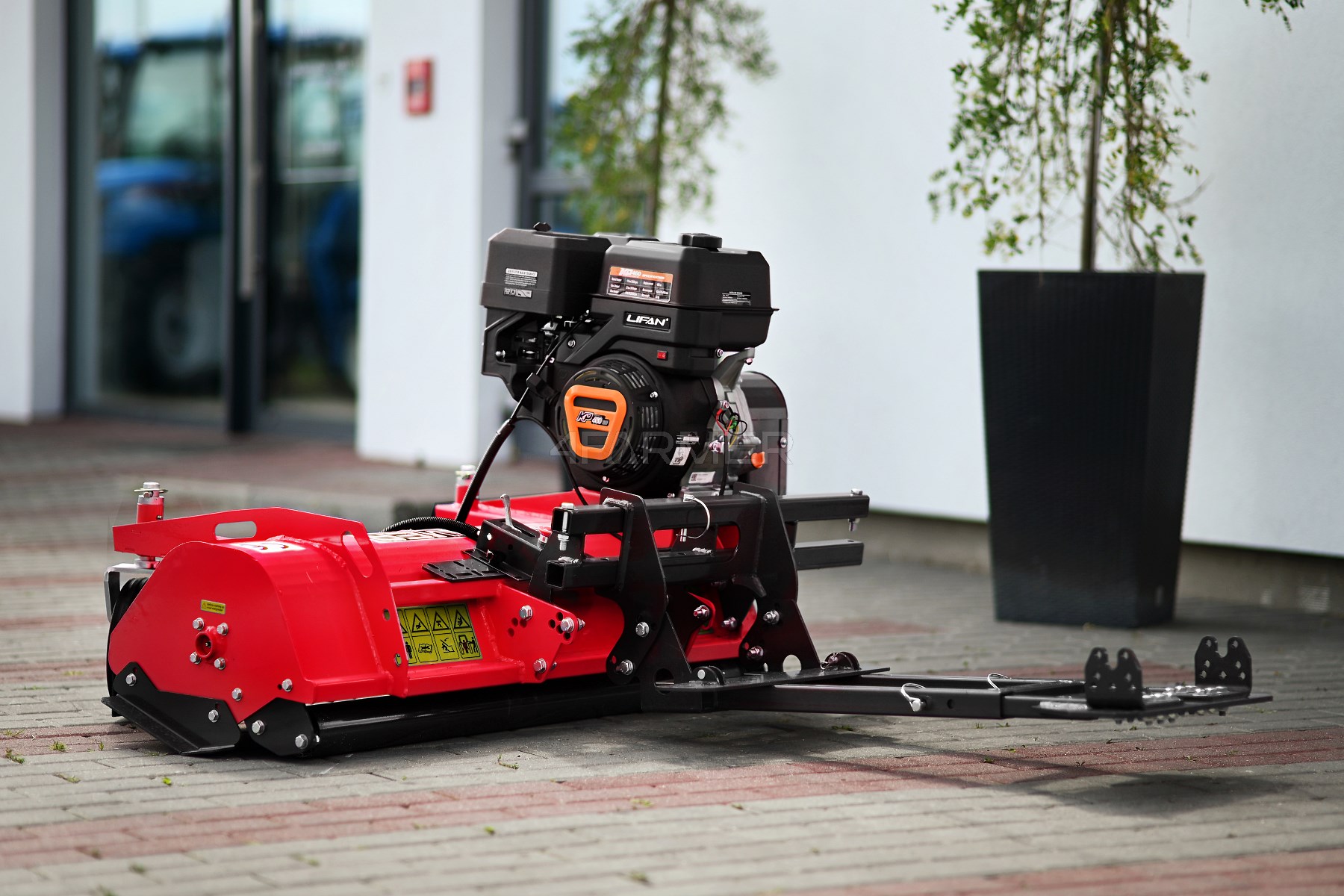
In one of our previous posts, we discussed the most common mistakes made when choosing a flail mower's working width. One of them was following the principle "the wider, the better." In practice, however, the working width itself shouldn't be the only criterion for choosing a machine. Matching it to the tractor's capabilities is equally important.
A mower that's too wide can result in reduced work efficiency, increased fuel consumption, and even overloading tractor components. So how do you choose the right working width for your machine?
Why is tractor power so important?
Flail mowers are machines that require a relatively large amount of energy. The high-speed rotor must not only drive the flails, but also effectively chop vegetation, branches, and crop residues.
The larger the working width of the machine, the greater the power requirement. When working in thick grass, undergrowth, or on wasteland, the difference can be particularly noticeable.
If the tractor does not have the appropriate power reserve, the operator may notice:
- a drop in PTO speed,
- uneven mowing,
- increased fuel consumption,
- slower operation,
- faster wear of drive components.
Approximate matching of working width to tractor power
Although the exact requirements depend on the design of the specific mower and the operating conditions, a few general rules can be adopted:
Tractors up to 20 HP
The smallest compact, orchard, and garden tractors work best with Flail mowers with a working width of 80 to 120 cm. This solution allows for maintaining adequate work efficiency without excessively burdening the machine.
Tractors 20–30 HP
In this group, mowers with a working width of 100 to 140 cm are most frequently chosen. This is a popular solution among owners of small farms, orchards, and green areas.
Tractors 30–50 HP
The most popular group of farms often uses mowers with a working width of 140 to 180 cm. This solution provides a good compromise between efficiency and economy.
Tractors 50–80 HP
With higher power, mowers with a working width of 180–220 cm can be easily operated. In many cases, these models are chosen for maintaining large green areas, orchards, or wasteland.
Tractors over 80 HP
Large farms and service companies often use machines with a width exceeding 220 cm. In such applications, it's not just the power that's crucial, but also the tractor's weight and stability.
Not just engine power
When choosing a mower, it's also worth considering:
- rear linkage lift capacity,
- tractor's curb weight,
- hydraulic system efficiency,
- type of work performed,
- nature of the material being mowed.
A mower used for regular grass mowing will offer significantly less resistance than a machine working in tall weeds, brush, or self-seeded trees.
It's better to leave some power in reserve
Many users focus on the manufacturer's minimum requirements. In practice, it's much more beneficial to maintain a certain safety margin. A tractor operating at 70-80% of its capacity typically provides higher performance, lower fuel consumption, and longer component life than a machine operated at its limits.
It's also worth remembering that operating conditions can vary significantly. Mowing regularly maintained green spaces requires significantly less power than shredding tall grass, weeds, or pruning debris. Therefore, when choosing a mower, it's always worth considering a power reserve that will allow for comfortable operation even in more challenging conditions.
In summary, a well-chosen mower allows you to work faster, more economically, and without the risk of overloading the equipment. Therefore, before purchasing, it's worth analyzing both the operating conditions and the capabilities of your tractor to fully utilize the potential of your flail mower and enjoy its trouble-free operation for many seasons.