

 Polski
 English




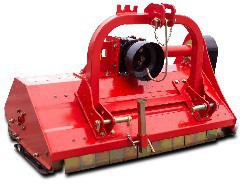




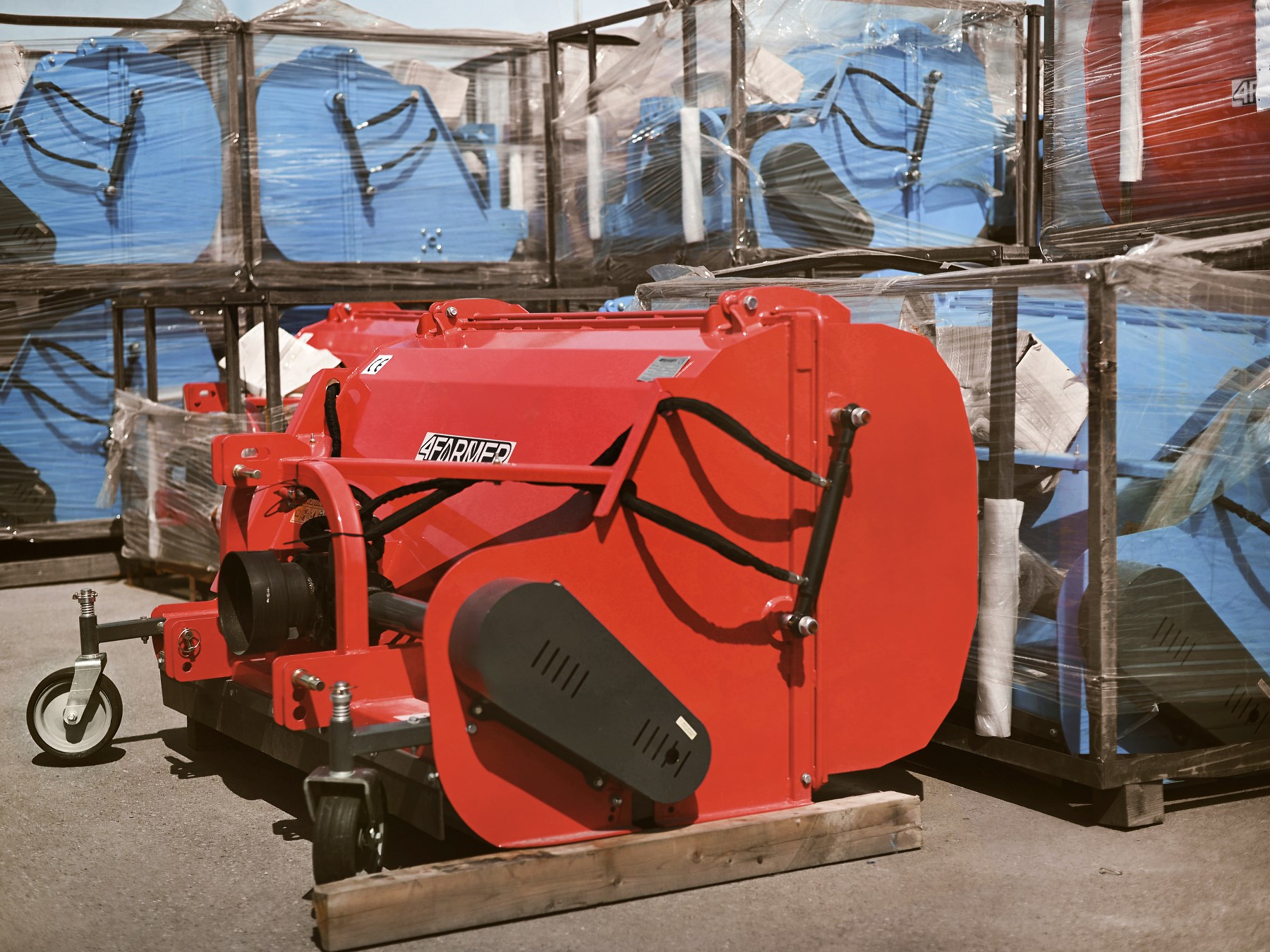
On our blog, we repeatedly emphasize that power output in horsepower (HP) or kilowatts (kW) alone is not a sufficient criterion for choosing a flail mower. In practice, many users notice surprising differences: two machines with identical rated power operate completely differently – one copes smoothly in difficult terrain, the other "chokes" in dense vegetation. Where do these differences come from?
Below, we discuss the key factors that actually influence the performance and smooth operation of a flail mower.
Rated Power vs. Effective Power
Manufacturers often specify the required power or the minimum required tractor power, rather than the actual power transmitted to the rotor. Losses occur, among others:
-
in the gearbox,
-
in the V-belts,
-
in the PTO shaft,
-
in bearings and rotating elements.
Two mowers with the same declared power can differ in drive system efficiency by up to several percent, which in practice means a completely different response to load.
Rotor mass and inertia
The rotor is the heart of a flail mower. Its:
-
diameter,
-
wall thickness,
-
total weight
have a huge impact on how the machine operates. The heavy rotor acts as a flywheel – storing kinetic energy and stabilizing the speed. Thanks to this:
-
It copes with momentary overloads more easily,
-
It does not lose speed in thick grass or self-seeded crops,
-
It ensures uniform material shredding.
A lighter rotor requires the same nominal power, but delivers it less efficiently.
Flammer Type and Arrangement
Not all flails are the same. The differences include:
-
weight of a single beater,
-
shape (Y, hammer - beater),
-
material and hardening method,
-
number of beaters per working meter.
A mower with a larger number of heavier beaters will require a more stable drive, but at the same time will provide:
-
better shredding,
-
less clogging,
-
more uniform mowing effect.
Machines with the same power but with a different beater configuration will behave completely differently. differently under the same conditions.
Rotor speed
Power isn't everything - how it's used also matters. The rotor can operate:
-
at a higher speed and lower torque,
-
or at a lower speed and higher torque.
A high speed promotes clean cutting of light vegetation, while a higher torque is better at handling:
-
woody stems,
-
bushes,
-
crop residues.
Two mowers with the same power but different rotor operating characteristics will be designed for completely different tasks.
Housing Design and Crop Flow
Housing geometry is an often overlooked aspect. Its shape affects:
-
the flow of mown material,
-
the possibility of it being struck again by the flails,
-
the risk of mower clogging.
A well-designed deck supports the mulching process and significantly reduces the load on the drive. As a result, the mower operates more smoothly, despite the same power.
Build Quality and Tolerances
Lock, rotor imbalance, weak bearings, or low-quality V-belts cause energy loss and vibration. In practice, this means:
-
higher power demand,
-
faster wear of components,
-
worse work comfort.
Therefore, two machines that are identical "on paper" may differ significantly in real use.
Adaptation to the tractor and working conditions
Finally, it's worth remembering that a mower doesn't operate in a vacuum. The following are important:
-
tractor torque characteristics,
-
PTO speed stability,
-
working speed,
-
type of material being mowed.
The same mower can work completely differently with different tractors, despite having the same rated power.
If two flail mowers with the same power output work completely differently, it is not a coincidence or a "marketing trick." Real performance is determined by the entire design of the machine, not a single number in the specifications.
That's why at bijakowe.pl we consistently emphasize: when choosing a flail mower, it's worth considering the broader perspective – the rotor, flails, drive, and build quality. Only then will engine power translate into real field efficiency.
Our sales representatives will answer your questions and help you choose the optimal lawn mower.